
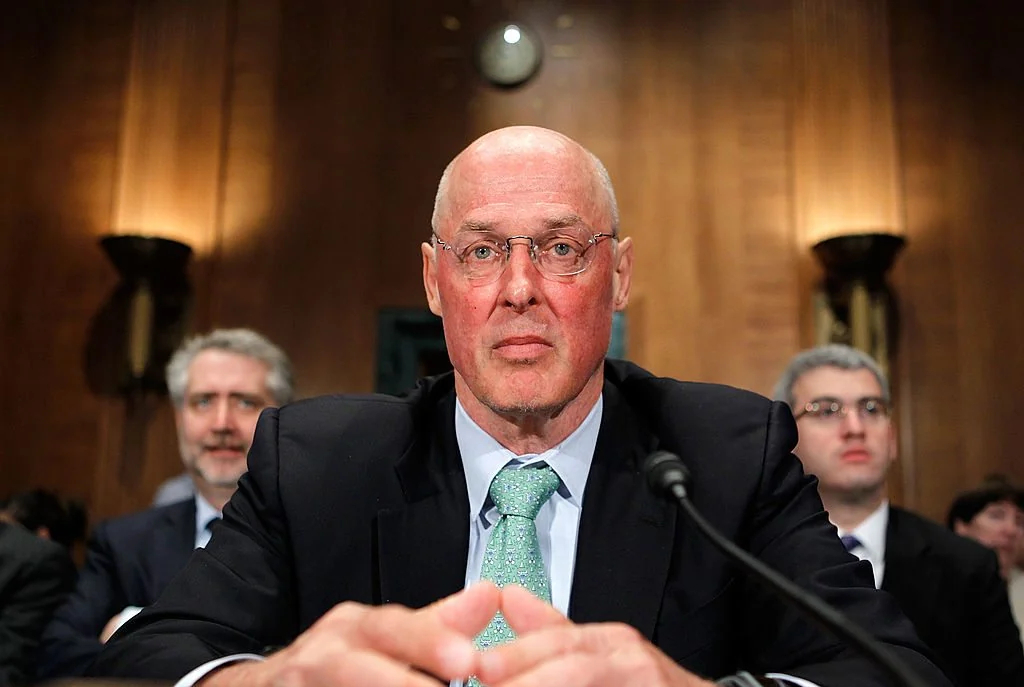
On May 30, 2006, President George W. Bush announced his choice to replace John Snow as the 74th Secretary of the Treasury: Henry Paulson, the chairman and CEO of Goldman Sachs. The nomination came with a massive pay cut and a requirement to unwind his financial interests.
From Wall Street to Washington
Paulson spent 32 years climbing the ranks of Goldman Sachs, starting in the Chicago office in 1974 and eventually becoming chairman and CEO after the firm went public in 1999. His compensation totaled approximately $38.8 million the previous year, while his new government salary would be $183,500, representing a pay cut of more than 99%.
To comply with government ethics rules regarding conflicts of interest, Paulson had to sell his Goldman common stock, which was worth nearly $500 million at the time. Selling a stock position accumulated over decades can trigger an enormous tax bill.
The Tax Break
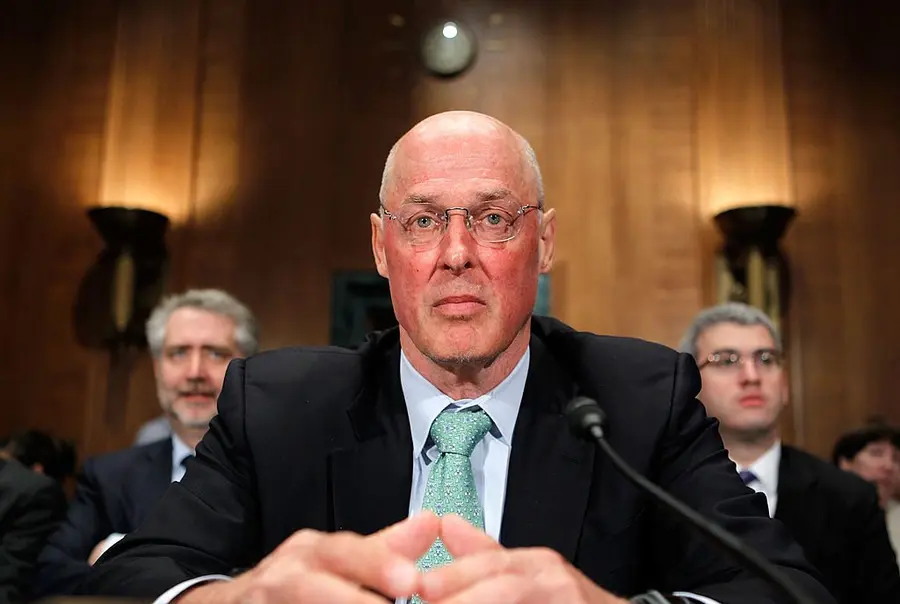
To prevent wealthy executives from being discouraged from entering public service, Congress created a provision in 1989 now found in Section 1043 of the tax code. Under this rule, eligible officials can obtain a certificate of divestiture before selling assets that create a conflict.
If the proceeds are reinvested in permitted investments—such as qualifying diversified funds or U.S. government obligations—within 60 days, the official can defer the capital gain. Paulson's potential tax bill for a complete divestiture without relief was estimated at more than $100 million.
The $491.6 Million Exit
On June 29, 2006, Goldman filed a registration statement covering 3,230,024 common shares owned by Paulson, valued at $491.6 million based on that day's closing price of $152.20. He also received an $18.7 million cash bonus for his work during the first half of 2006 and $110.1 million to cash-settle previously awarded restricted stock units and options. Paulson was sworn in as Treasury Secretary on July 10, 2006.
A Multi-Billion Dollar What-If
Leaving Goldman initially looked costly when the firm's shares reached an intraday high of $250.70 on October 31, 2007, valuing his former shares at $810 million. However, the 2008 financial crisis brought a severe downturn, with Goldman stock plunging to $47.41 by November 21, 2008.
Over the following years, Goldman recovered and its stock climbed significantly. At the October 27, 2026 closing price of $911.77, Paulson's former 3,230,024 shares would have been worth $2.95 billion, excluding dividends. While his divestment proceeds were reinvested elsewhere, the figures highlight a remarkable chapter in financial history.